Appearance and handling
Define whether visibility, colour, gloss or impact performance matters most. Include how the finished pack will be filled, stacked and transported, so the material review reflects actual handling.

MATERIAL GUIDE / PS
Polystyrene
Polystyrene (PS) is used in thermoformed cups, trays and packaging inserts. Grade selection brings together appearance, stiffness, impact performance and processing needs. Start with your finished part and production method, then define the sheet specification and checks your application requires.
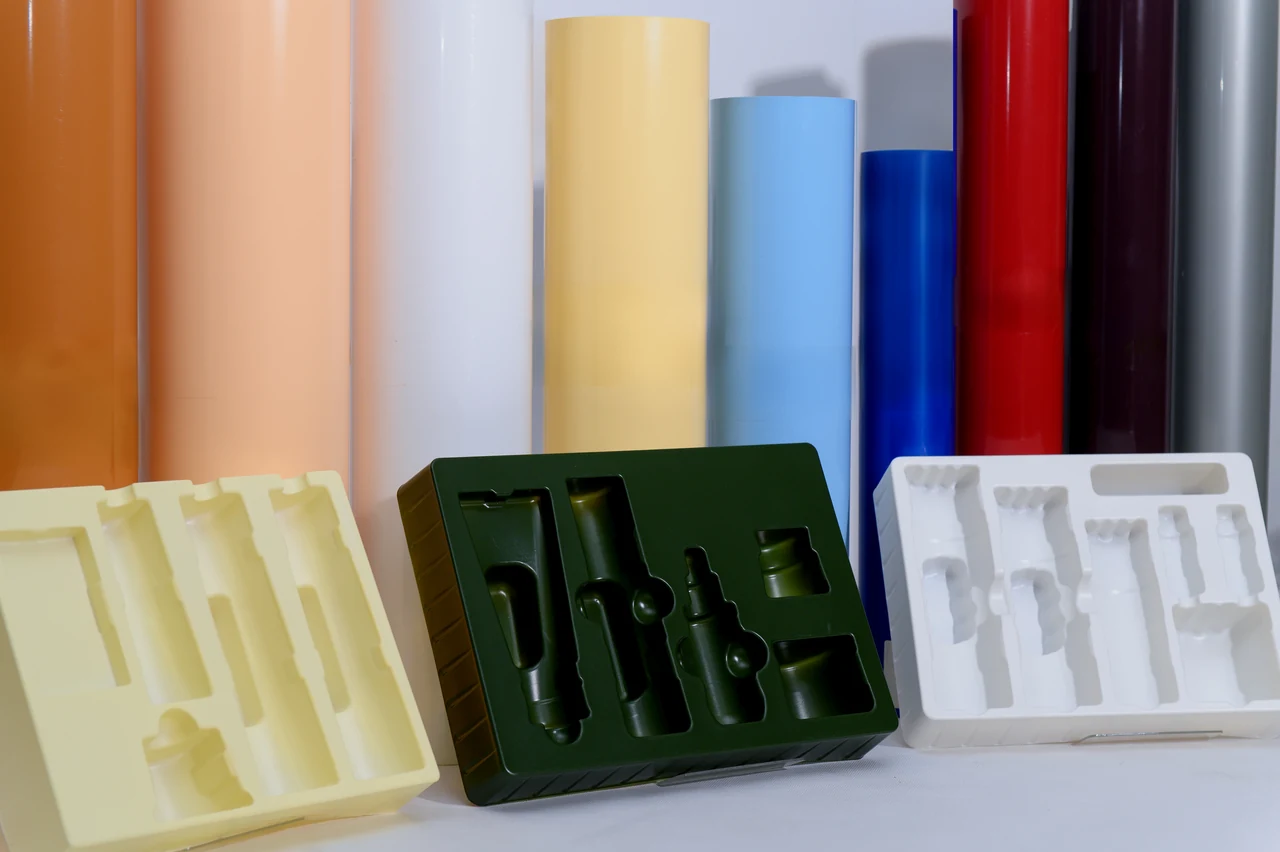
01 / MATERIAL BASICS
Two common PS families are general-purpose polystyrene (GPPS) and high-impact polystyrene (HIPS). GPPS is associated with transparency and stiffness; HIPS is modified to improve toughness. These names describe broad material families, with individual grades offering different balances of properties.
For packaging, the formed shape matters alongside the sheet. Wall distribution, corners, rims and cut edges influence how a part handles and fits. Evaluate forming, trimming and assembly together when comparing samples for your production line.
This guide explains material families and selection considerations. Available specifications and suitability are reviewed for the selected grade and application.
MATERIAL PHOTOGRAPHY
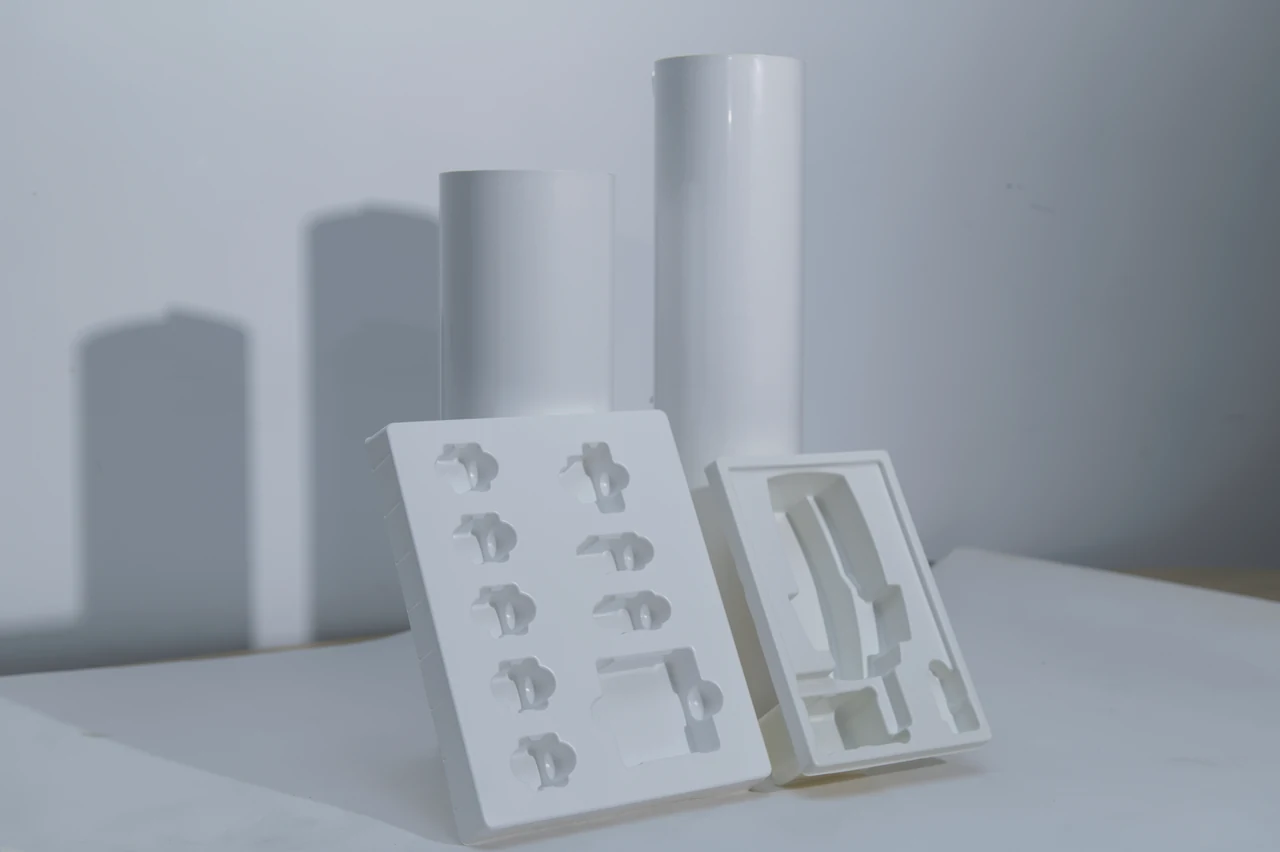
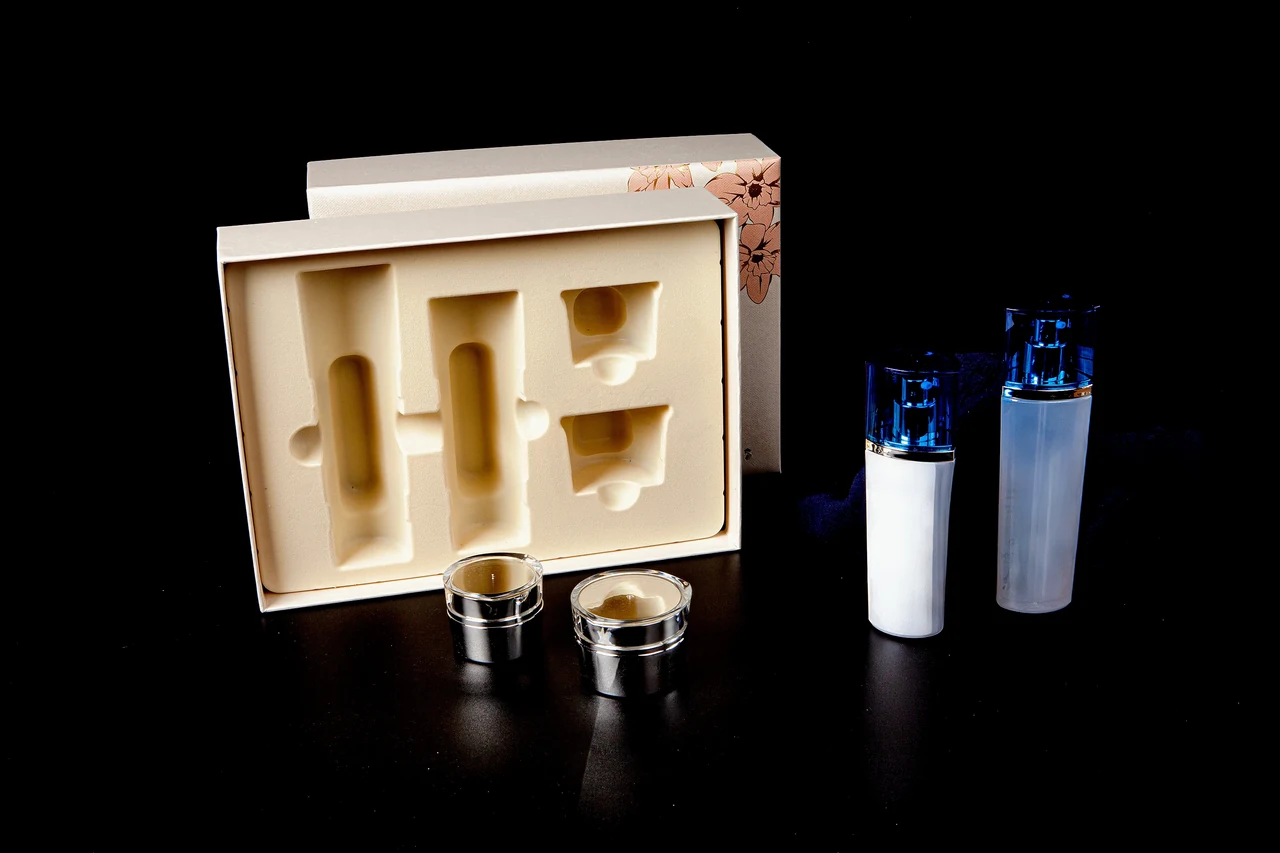
02 / SELECTION
Define whether visibility, colour, gloss or impact performance matters most. Include how the finished pack will be filled, stacked and transported, so the material review reflects actual handling.
Share the forming method, part depth and tooling details. For punched lids or snap-apart packs, describe the required edge quality and separation behaviour; assess these on formed samples.
Identify the printing process, ink, label or adhesive, and whether decoration happens before or after forming. Include sealing and closure requirements when reviewing the sheet surface.
03 / APPLICATIONS
For dairy cups and similar packaging, review forming detail, rim dimensions and closure fit alongside filling conditions and the intended contents.
For food or product inserts, describe cavity geometry, support points and stacking. State any direct-contact requirements with the intended use.
Provide the mating container dimensions, opening features and handling requirements. Check the assembled pack rather than judging fit from the flat sheet.
Application examples describe possible uses of the material family. Share the intended contents, conditions and documents required for your project.
04 / SHEETNEX SUPPLY REFERENCE
Rolls and cut sheets, with the final specification agreed for your order.
Widths shown are typical ranges. Other widths and structures can be discussed. Roll weight is separate from the order minimum; specification mix, thickness range, roll diameter and cut-sheet dimensions are confirmed with your quotation.
For most orders, production can be completed and the goods handed over to the carrier within 7 days after the order and specifications are confirmed. Transit time is additional and depends on the destination and shipping method. Large orders, custom specifications and special finishes require a separately confirmed production schedule.
05 / YOUR INQUIRY
Send the details you have. Mark anything still undecided for discussion.
Drawing or reference sample, dimensions, contents, load and intended use.
Machine type, forming method, tooling, trimming and any printing or sealing steps.
Thickness, width, colour, appearance, roll core and diameter, or cut-sheet size.
Handling and storage conditions, acceptance criteria, destination market and required documents.
06 / COMMON QUESTIONS
If a grade is already approved, include its reference. Otherwise, describe the part, appearance and handling needs first. Availability and the proposed specification can then be reviewed for your project.
Include the printing method, ink system, artwork coverage and production sequence. A representative sample helps assess print appearance and adhesion under your intended processing conditions.
No. Specify the temperature, duration, contents and heating method. Suitability needs review for the particular grade and finished pack; a general material description does not establish it.
LET’S TALK MATERIALS
A drawing, sample photograph or equipment specification is a useful starting point.